Last month, we focused on the pressing need for more school autonomy in public schools–or as we like to call it, freedom and flexibility. We understand communities have different needs. COVID-19 uncovered and amplified existing inequities and forced schools to rethink the delivery system for children in weeks and months instead of years. It also showcased the need to reinvent and reimagine how we think about schools and how they can meet the specific needs of their students and community. 

As a part of the campaign, we sat down with Emily Castillo Leon, founder and head of Ethos Classical, to share how Ethos’ school leaders have exercised freedom and flexibility to rise to the challenges of a pandemic and an endemic world.

More than ever, we feel that increasing schools’ autonomy and flexibility will enable schools to develop and implement approaches to teaching and learning that better build on our strengths and address the needs of students than if policymakers or others outside schools made those decisions.

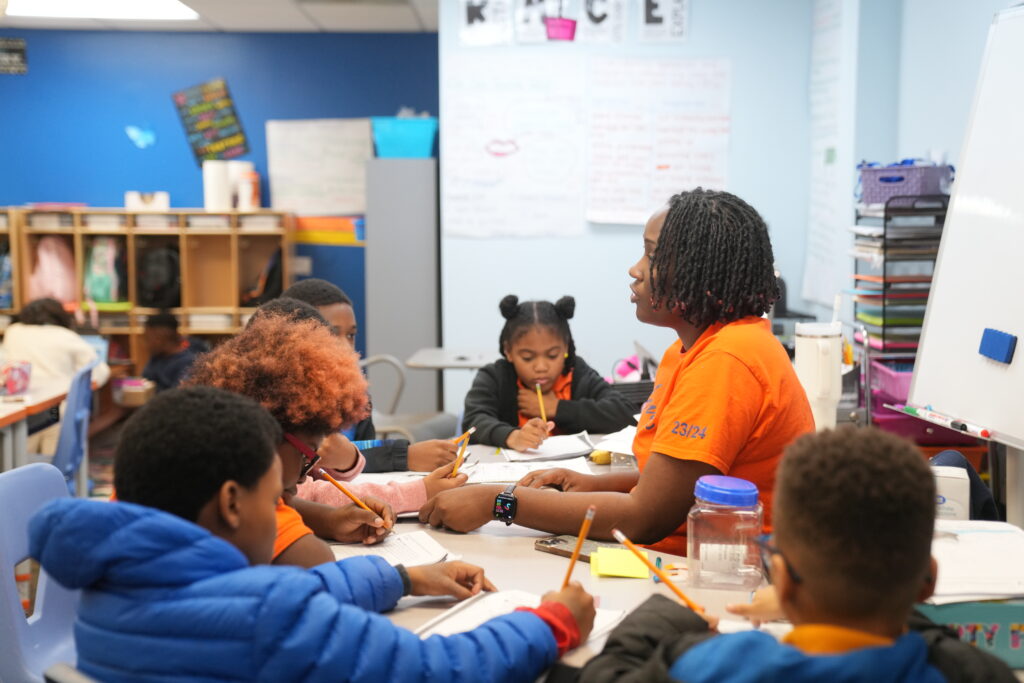
Every child is different, and we get to see where they soar and when they need support firsthand because teachers and school leaders are in schools and classrooms with them nearly half of every calendar year. School leaders and educators can best do their work when they can adjust and tailor learning to students’ needs in real-time or adjust the next day’s lesson based on what happens in a school day. 

Statistics have shown an increase in freedom and flexibility in the most-needed high-risk school systems can enable schools to develop and implement approaches to teaching and learning that better build on their strengths and address the needs of their students than if policymakers or others outside schools made those decisions.

School empowerment can show up by allowing a school leader to adjust a school’s schedule, make changes to the staff, allocate their entire budget, and select curricula that provide every student in their school with an excellent public education. 

Giving school leaders room to redesign their neighborhood school in partnership with their community or even allowing for new schools to open in response to students’ needs is a way to ensure every child can attend the school that’s a right fit for their unique needs. 

Like our children, schools are different too, which calls for our school leaders to be able to employ teacher autonomy to support and help design the best programs that meet the needs of all children, regardless of their zip code.

Collectively, the support and trust from our community, civic leaders, and educational collaborators are needed more than ever so that we can have the freedom and flexibility to create solutions and make the best decisions based on the needs of our students. We can only achieve this mission by working together.

RedefinED recognizes that to ensure every student in every community has opportunity, well-being, and self-determination, there must be resources for organizations to work and thrive. Watch the video to learn more about school freedom and flexibility!

Related News & Updates

Driving Lasting Change One School at a Time

Looking Beyond Graduation Rates to Better Understand Student Achievement

Looking Beyond Achievement to Better Understand Student Growth

Scroll to Top

Dr. Keith Colbert

Dr. Keith A. Colbert has served in the Clayton County Public Schools (CCPS) system since 1998, starting his career as a fourth-grade teacher at Northcutt Elementary School. After a two-year tenure at Northcutt Elementary, he transferred to Morrow High School, where he served as a math teacher, special education teacher, and assistant head basketball coach. To gain insightful leadership experience, Dr. Colbert shadowed the administrative team, gained useful school leadership experience, and obtained a Master’s degree in Educational Leadership from Troy State University.

Dr. Colbert was selected as assistant principal of Mundy’s Mill High School (MMHS) in 2003 under the leadership of Dr. Anthony W. Smith. During his tenure at MMHS, he was instrumental in preparing the first class to graduate from the newly constructed school.

Dr. Colbert was recognized as a future principal leader in the district and was selected as one of twelve future leaders to participate in the principal preparation program, “A Forward-LEAP.” After completing this program, Dr. Colbert was appointed principal of Lovejoy Middle School in 2006, where he led more than 1,400 students. At the time, Lovejoy Middle School was the largest middle school in the district and considered underperforming. Dr. Colbert and his team led the school to substantial improvements in student achievement and were consequently selected as the 2008 Georgia PTSA Principal of the Year.

Driven to nurture a class of students from 6th grade to graduation, Dr. Colbert was appointed principal of Lovejoy High School in July 2009, where he served for seven years. He is one of the few principals in traditional high schools who is fortunate to have guided sixth graders to graduation with the Class of 2013. During his tenure at Lovejoy High School, the school was recognized as a Title I Rewards school in 2012 and 2013, SAT’s greatest gains school in 2012, and a USA News top high school in 2011. Dr. Colbert’s achievements led to a finalist for Principal of the Year for Clayton County Public Schools in 2011 and 2013.

In June of 2016, Dr. Keith A. Colbert was appointed Assistant Superintendent of Schools for Clayton County Public Schools.

Cayanna Good, Ph.D.

Dr. Cayanna Good serves as Deputy Commissioner for Innovation and Impact at the Technical College System of Georgia (TCSG), where she leads systemwide strategic planning and drives organizational improvement across all institutional pillars.
Previously, she served as Assistant Commissioner for the Office of Adult Education, overseeing statewide literacy initiatives, workforce alignment, and Georgia’s high school equivalency credentialing program.

Before joining TCSG, Dr. Good held leadership roles at the Governor’s Office of Student Achievement, the Georgia Department of Education, Teach For America, and TNTP. Her career began in the classroom in Houston — an experience that continues to ground her unwavering commitment to equity, access, and opportunity for all learners.

Dr. Good earned her bachelor’s degree from Fisk University, her master’s from Georgia State University, and her doctorate from Mercer University. She serves as Chairperson of the State Charter School Commission, she is a member of the Georgia Commission for Service and Volunteerism, a member of Alpha Kappa Alpha Sorority, Inc., and a member of the Brookwood High School Local School Council.