For the past ten years, RedefinED Atlanta has worked alongside Metro Atlanta communities to strengthen public education. Together, we’ve helped grow strong public schools, made school information easier for parents to understand, and supported community members in becoming confident, informed advocates for their children and their schools.
Now, we’re looking ahead to what’s next. Over the next three years, RedefinED is focused on making sure 12,000 more or additional students, especially those furthest from opportunity, can access public schools that truly help them thrive. That means standing up for the policies, partnerships, and investments that help schools succeed. It means supporting public schools of all kinds that are doing right by our students. And it means listening closely to communities, sharing what works, and building solutions that reflect local voices and real needs.
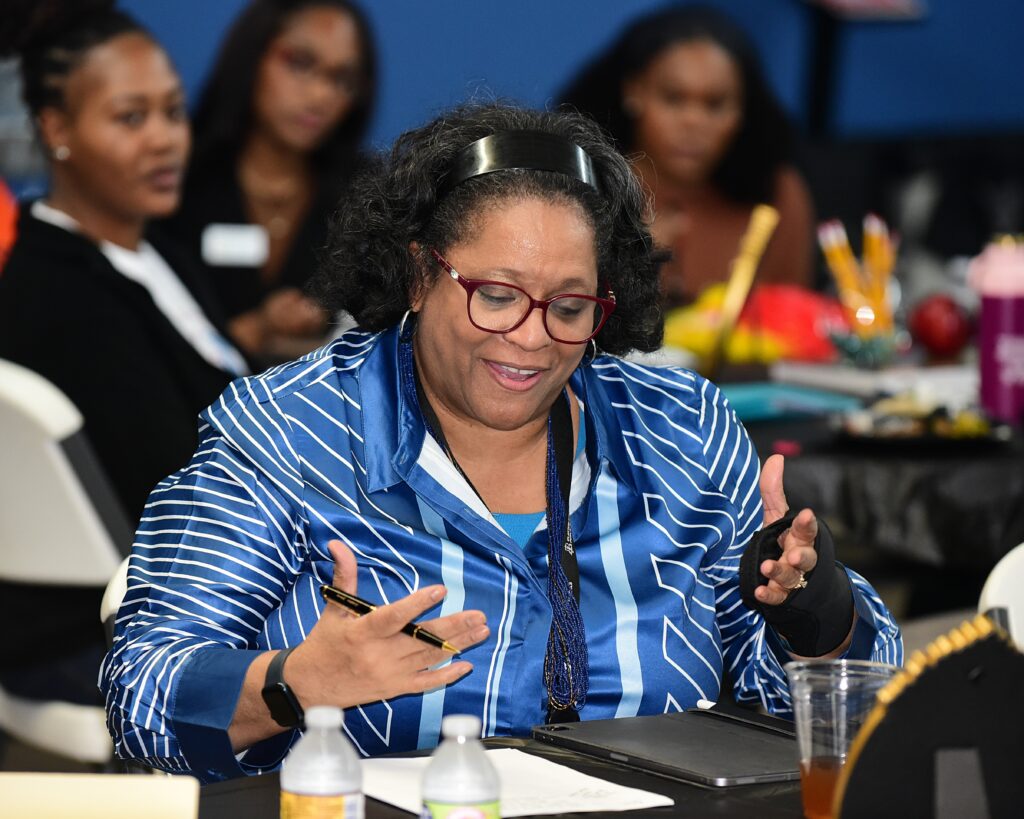
That is why we hosted a Community Dialogue in February aimed at breaking down the Clayton County Public Schools (CCPS) academic outcome data, highlighting innovative solutions being employed by schools that are beating the odds, and facilitating collaboration across families, schools, and community leaders.
We were excited to see not only a great turnout at the event, but also that attendees were clearly invested in the conversation, with many even expressing an interest in continuing beyond the session. This includes attendees like the Mayor of Forest Park, Dr. Gwen Webb Ellison, and some of our previous Clayton County Community in Action grantees: Melanated Pearl, Georgia Appleseed, and the CCPS Early Learning Department.
The evening’s highlight: A panel facilitated by Ophelia Nnorom, a parent advocate with over five years of experience championing high-quality education in the state of Georgia, and featuring panelists Viki Dennard, the Coordinator of Early Learning for Clayton County Public Schools, Tenisha Bailey, Principal of Jonesboro High School, and Delphia Young, Deputy Superintendent of Teaching and Learning and Strategic Improvement for Clayton County Public Schools. Guests had the opportunity to drive the discussion with live Q&A, and afterwards discussed key takeaways in small groups. Here’s what we heard:
- Parent partnership is the next step. Parents play a large role in what happens next. They should be active partners with their child’s teacher and school community. This includes showing up, asking questions, coming to the table with ideas and a willingness to act, and engaging in school leadership opportunities.
- Creating the right conditions for learning is key. Both schools and families share responsibility in creating supportive learning environments. For schools, this includes ensuring students have access to industry-standard tools (like Adobe instead of Canva) so they are building real-world skills aligned with workforce expectations.
- Data-informed instruction and alignment drive progress. At the educator level, both qualitative and quantitative data are being used to differentiate instruction based on students’ individual learning styles and needs. Ongoing conversations between administrators, educators, and parents can help establish a shared understanding of the data and alignment on next steps to drive student progress.
Community Dialogues like this one are important because they spark new ideas, connections, and the motivation to really dive into the data that’s accessible to us all and leverage it to support students. We appreciate those who were able to attend in February, and hope our community will continue to participate in future conversations. Learn more about how RedefinED Atlanta is investing in collaborative ecosystems.