Black History Month highlights Black achievements and people pushing for change. What better way to celebrate these past efforts than to advance future opportunities? Education promotes future success and well-being for individuals and communities. That’s one reason to increase access and equity in our K-12 education system. Others include fighting systemic oppression, honoring Black youth, and ensuring that every child in every community receives a great K-12 public education. As passionate education advocates, we move this work forward in many ways. Whatever each of us does to advance systemic change, it’s also critical that we vote for education and encourage our friends and neighbors to do the same.
Civic Leadership and Our Schools
Since nothing about this work is quick or easy, keeping historic civic leaders and their progress in mind is helpful. Centuries ago, during post-Civil War Reconstruction, Black people overcame countless barriers to educate children and increase the number of Black teachers. In addition, Black leaders and activists laid the groundwork we’re still benefiting from and building on today — one being the building of the nation’s largest complex of Historically Black colleges and universities (HBCU) in Atlanta between 1865 and 1881.
The effort was impressive and successful despite being repeatedly undermined by constantly shifting rules and political responses. One prominent example of this systemic undermining happened when the U.S. government stopped funding the Freedman’s Bureau in 1872. Another happened 82 years later when desegregation, coupled with systemic racism, shut out many successful Black teachers from our public school systems in Atlanta and nationwide.
Today, communities across the country continue to feel the impacts of disparities and inequities, and a shortage of representative teachers and administrators in public education. Like those who came before, current-day leaders like you, parents and caregivers, educators and advocates, and our youth continue to navigate obstacles and find this moment’s opportunities.
Why School Board Elections Matter
One current-day opportunity worth taking a closer look at is school board elections. Unlike national elections, school board elections take place in a local context. By learning about and supporting candidates who champion educational equity, we can better our schools and create a pathway for more representative leadership at the state and nationally.
School board elections also promote democracy. Communities gain more understanding about school issues when candidates bring attention to their priority issues. Candidates representing and in dialogue with communities give citizens a voice and ownership over critical education decisions. Once voted into office, we entrust these elected officials to protect children, create safe and welcoming schools, equitably distribute funds, write, research, and vote on policies that ultimately advance the impact of education as a public good.
Voting Takes Our Work Further
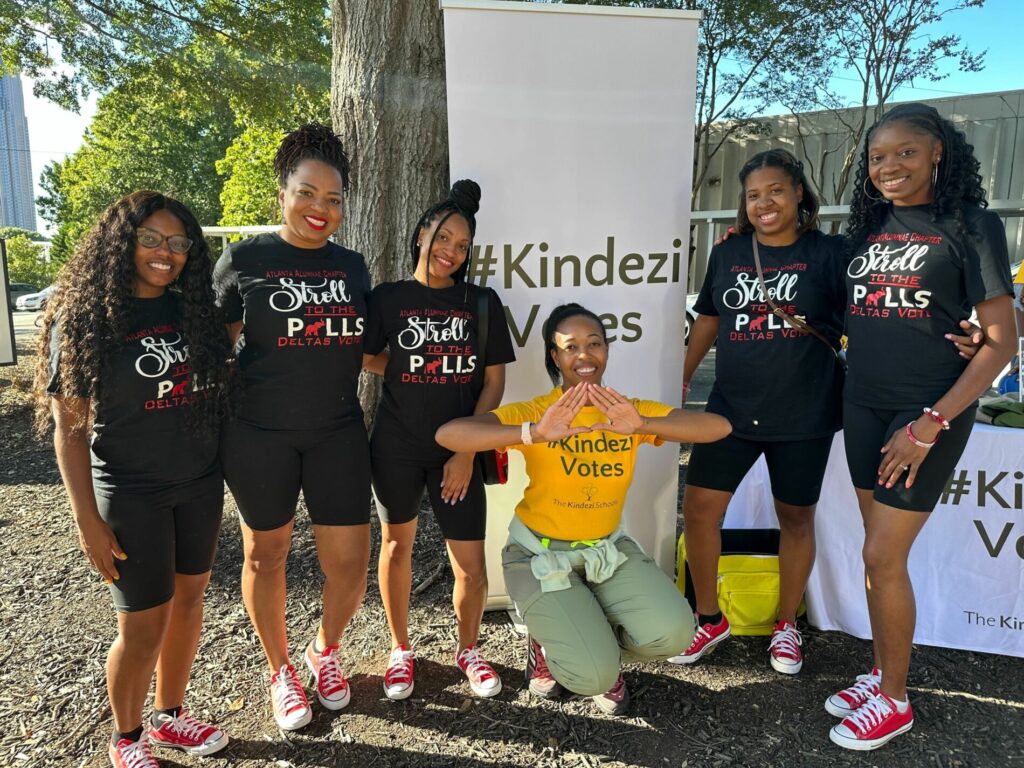
At RedefinED Atlanta, we believe one vote can make a difference, but collectively, we are even stronger. Our work around voter mobilization means activating a well-informed voter base that can help elect community leaders into seats of power who will aid in advancing policy change to ensure all children and families have access to high-quality public education.
In 2022, we set specific goals to grow voter participation among Atlanta public school families during the midterm elections and the race for state superintendent. The results are worth celebrating. Highlights include a 19% higher voter turnout at our four partner schools than in the general election in 2021. The turnout in 2022 among these families was also 23% higher than voter modeling predicted.
After incorporating lessons learned from our 2021 voter mobilization efforts into our 2022 campaign, we plan for even more progress later this year. A few lessons learned included starting our efforts earlier in the year, increasing the content we distributed online and in print, and securing voting champions at every school to increase outreach and engagement.
In addition, we launched an electoral fellowship, a pilot cohort designed to engage families and educators who served as organizers for their schools’ communities. The fellows also hosted and tabled at events, canvassed in school communities, and phone banked to mobilize families to increase voter turnout.
While one vote can sometimes feel insignificant, it’s not – especially when done as a community. It’s yet another example of the power of sustained collective effort over time. By making it a top priority to vote and urging those in our circle to do the same, our impact continues to grow.